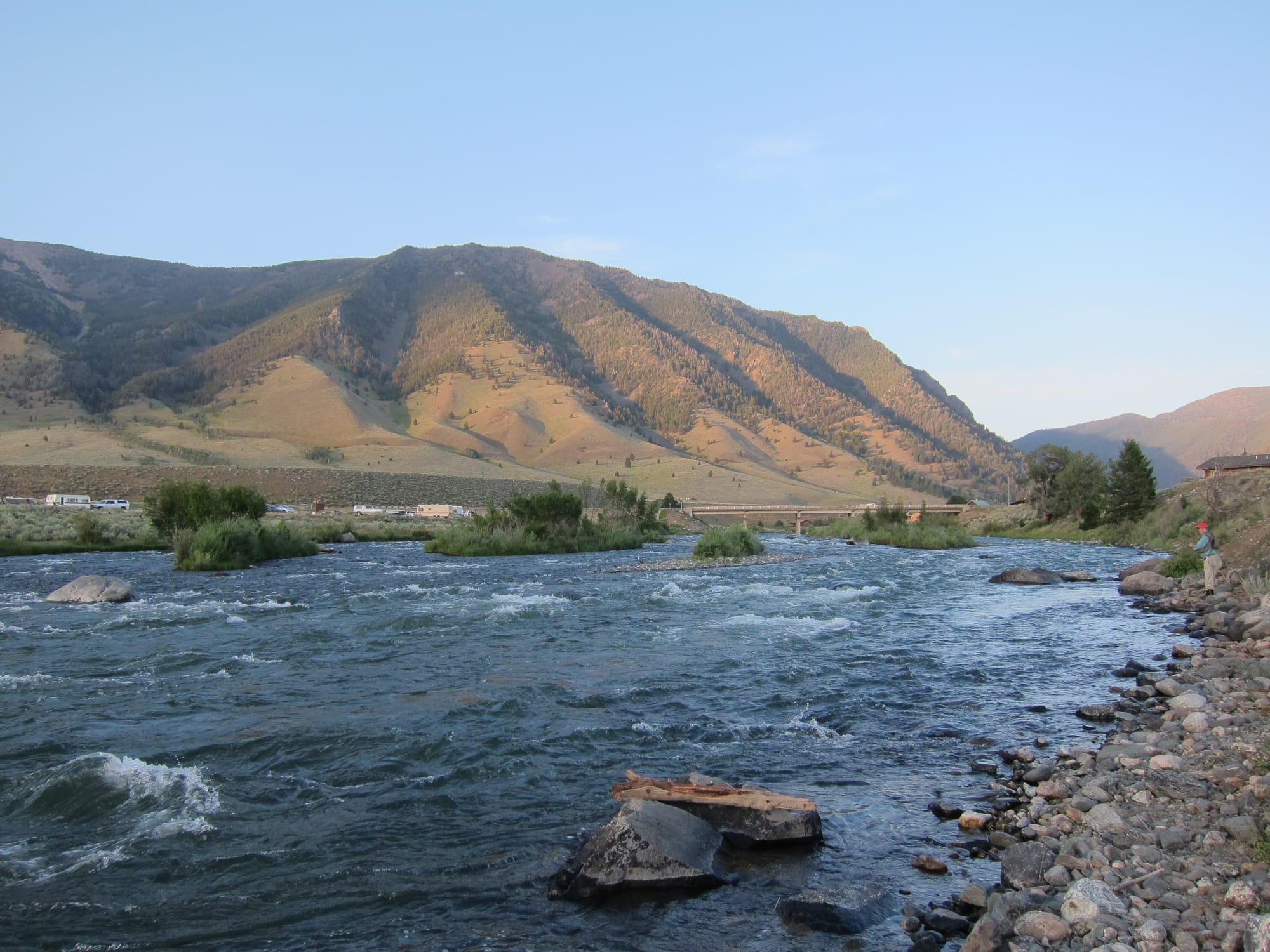
It’s amazing how upcoming trips accelerate gear acquisition. The Salmon River steelhead trip goes on the calendar. A new two-handed rod appeared (Beulah12’4″ Platinum Spey) as if conjured up by magic. Pretty soon I was waving that mofo like a sloppy wand, to the pursuit and deception of exactly zero fish, yet grinning like a wizard with a head full of potion.
Despite the hard skunk, after years of pestering him I finally got a chance to fish with Rob Ceccarini, who runs Orvis NYC‘s fishing department. We were up with a group of miscreants he’d curated, staying at the Salmon River Victorian Inn, with owner Bob and renowned guide and spey expert Walt Geryk. We fished around Altmar and Pulaski and through the DSR. Rob brought up a new Helios 2, which I got a chance to cast, and on first impression exceedes the standard its younger version set.
But, to the fishing.
Releases ahead of Sandy had the river at 950+ CFS, and the bite was definitely off. There’s really little you can do at that point but keep your technique tight, enjoy the surroundings and keep cool. Remind yourself the worst day on the water is better than the best day off. And that even the guy who was there two weeks ago and brought a dozen steelhead to hand is on an 0-fer too.
Self delusion? Yes, the worst kind. Truly bad days anywhere hurt. Luckily, I didn’t read Mark at the River is Wild‘s Salmon River struggle until I got back. Shit luck is an understatement.
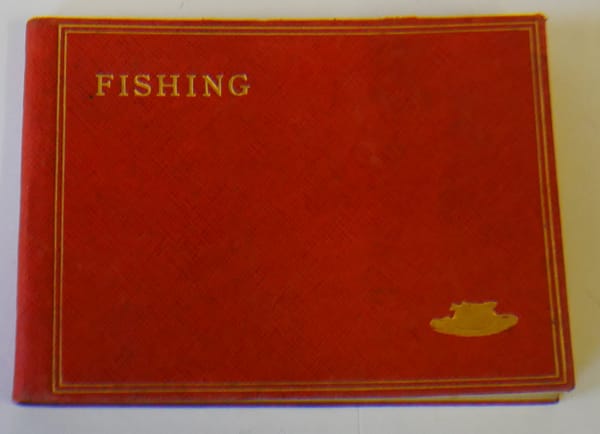
The book concerns the decades William James Lunn spent in the early 20th century as the river keeper on the famous Test in Hampshire, England, specifically at the Houghton Club in Stockbridge.
Lunn’s life was certainly impressive: through perseverence and luck he escaped a life in factories, which began at age seven in a brickyard working sixteen hours a day, to eventually manage the fishery for a good 45 years.
His work was extensive, and chronicled in the book. Cutting grass, and repairing banks, rearing insects to be introduced or reintroduced into the river, rearing hatchling fish, battling predators: these are all duties that are described in detail.
For the gentlemanly type of fishing that went on (and still does) at the Test, this manicured comfort was essential. No wading, walk along the groomed lawn or path beside the river. Cast only a dry fly to feeding fish. A far cry from tactics used around the rest of the world.
The book is full of interesting anecdotes, how patterns were developed, curious rigs for breeding flies, the best food for trout to be stocked (a mixture of horseflesh and mussels, actually).
One of my favorite passages is towards the end:
Lunn taught me what I may call imaginative concentration. It is a common mistake to say that fishing needs patience. You should be impatient, never putting up with defeat. Patience is passive: you require the active virtue of concentration: but even this must keep your inventive faculties in play. Lunn’s eyes never left the water, and his mind never stopped thinking. He hated that laziness which disguises itself as activity, the energetic persistence in the use of a disregarded fly. Off with it, off with it at once, and the next too and the next until the fish either rises or removes himself. Lunn would no let me go on as I had gone on before and persevere with what I believed to be the best pattern and to persist after it had been refused. That is one way of fishing, and it often gets fish: after you have tried several likely flies, do not go on changing, but tie on the most likely, and stick with it. It is not a bad way, but it is not Lunn’s way. With him as your companion, you were continually changing your fly. If all your patterns were refused he would go back to an earlier one, at which the trout had given a friendly look: anyhow he would not let you continue with the same.
I tagged along to try fly fishing Fort Tilden this morning with some spin fishermen I know to see if I could move a few striped bass with my Rise Level seven weight. The Rise is splendid, and is my go-to bass rod for any warm water lakes (or just fishing locally at Prospect Park) but I didn’t quite have the muscle to punch into the surf. There was no wind, which was nice, but the surf was up and it was tough to work anything reasonable through the wash. The whole Gateway National Recreation Area is lovely, and makes me wish I had more aplomb in the salt. There’s a lot of fly fishing available at Fort Tilden, which is actually a decomissioned military base, and housed missiles to defend us from the Russkies at one point, as well as further up at Breezy Point as well as inside Jamaica Bay. Fort Tilden also has the reputation of Williamsburg-by-the-Sea during the summer months, with the free-and-easy of Brooklyn enjoying the quiet, occasionally au natural.
But, let’s not get distracted, yes? We’re talking about trying new styles of fishing, not lounging in the sun looking at boobs. Focus up.
Of course, new styles means new gear.
So perhaps a bigger stick is in order to explore this new frontier? Yes, well, as you suggest, I’m looking at a bigger two-handed rod to be able to get flies out beyond the breakers. A rod that could double as a steelhead stick in Michigan and Oregon later in the winter. I’ve been speaking to specialists at several local graphite emporiums who have given me all manner of opinions on what style and specification of fishing tool may unlock these waters. Of course, this all depends on my ability to take a few rabbit punches in the old credit card. It could be a busy autumn.
I shot this cinemagraph yesterday on the Gunpowder River in Northern Maryland, using the Echograph app. A little out of focus, a little artifacted (Flip cam to iMovie to iTunes to my iPad to Echograph, with subsequent degradation throughout) but could be promising for little bits of fun this summer.
(Yes, there were fish, they were nibbling on sulphurs, and I spent some time trying to convince them to pass up their naturals for my imitation before I turned to modeling.)
It’s only May, but George Daniel‘s Dynamic Nymphing is already our favorite flyfishing book of 2012, and is likely to stay in the top spot. It’s the best sort: the kind that not only motivates you to go fishing, but gives you the tools to do the job better.
Daniel, who hails from central Pennsylvania and is the assistant manager of State College’s TCO Fly Shop, is one of the most highly lauded fly-fisherman in the country, earning all sorts of accolades competing and coaching internationally over the past decade. It’s unlikely the Denver Post‘s Charlie Myers is exaggerating too highly when he says a compelling case can be made for Daniel as “the best fly-fisherman in the country” in one of the book’s blurbs.
Spend a few hours with Dynamic Nymphing and you’ll certainly agree, at least, that Daniel is among the sport’s most analytic. He delves into all the major elements of subsurface fishing, from rigging to casting to reading water and stocking your boxes. Daniel’s a systems thinker, and the book is a compendium of all the things he’s tried and tested over the course of his professional career.
This isn’t to say the approach is formulaic or dispassionate. Daniel peppers the instruction with anecdotes of his time on the water, of personalities he’s learned from, of the international fisherman he’s crossed paths with during his time traveling to fish competitively.
The end product is an enduring reference material without parallel, one that an active fisherman can take a few tips from here and there to bolster an existing archive of knowledge, or a newbie can use as a foundation to enter the sport. A number of elements of Daniel’s system have already crept into parts of our approach.
We were lucky enough to get some time with George (in between the Green Drake blitz, even!) and had the chance to ask him a few questions about his approach to the book.
CFS: How long did it take you to put the book together?
GD: The book project was a total of three and a half years, running everything from the outline to the final manuscript.
CFS: What was the process of putting it together?
GD: I had Jay Nichols from Stackpole and Headwaters contact me, and they had just followed a little of my career and heard me speak at a number of events and came to me and said “With all this information and these insights you’re bringing from different countries, it may be a good idea to put together a book.” We came up with a good outline and that’s basically it.
CFS: When did you first begin to focus on nymphing?
GD: When I joined the national team, I liked all aspects of flyfishing, but we would get video of people fishing, the Czechs, the Poles, a number of them, and as soon as I started watching these guys, it was really cool to see. It’s not revolutionary, but the small details, the elevation of the rod, the induced lift, the leader designs, all the things these guys were doing, were all slightly different. That sparked the fire in me, to take my game up and learn all the tips and tricks that these guys were employing.
CFS: If you had to pick one nymph method to use exclusively on all rivers, what technique would it be?
GD: I would probably say tight-lining. It’s a short-line version of high-sticking, the Czech or the Polish system. You have a more direct connection between the rod tip and the nymph. I was on Penns Creek yesterday, and the water was really rough, so I couldn’t get into position and I had to use an indicator. If I had a preference, at least where I fish here in central Pennsylvania, I’d go tight-line.
The book has a ton of in-depth information on rigging, leaders, fly design and more
CFS: I assume with nothing rising you would always start with a nymph. What triggers you to switch from nymphs to dries? One fish rising? Ten fish rising?
GD: There’s a number of things to factor. Around here, I need to start seeing a fish rise every other minute to get my interest up. If I see an occasional rise, I’m going to stick to nymphing. But every other minute, the amount of effort is worth it. Last night, on Penns Creek, later in the evening, during the Green Drake hatch, I didn’t want to mess with nymphs. The takes are vicious, so I was just headhunting. Because naturally I enjoy the sight of a 14″ or 15″ brown inhaling a Green Drake off the surface.
CFS: If you had to fish with four nymph patterns exclusively on all rivers what would they be?
GD:Frenchie, Lance Egan‘s, another one would be his Iron Lotus, another one would be his Rubber Leg Stonefly, and the fourth would be a little Zebra Midge, or some midge pattern.
CFS: A lot of what you talk about in the book is making sure your fly is in the right position. How do you know when your fly is in the zone? Are there any visual cues or tips to help shorten the learning curve?
GD: I like looking at the goal, you have a spot a fish that’s likely to hold, the primary zone. Typically you have your primary zone, where it’s likely to hold, and you have your secondary target, where you need to place the nymph to get to the primary zone. If they’re not even touching bottom there after one or two times, I’ll add weight, and if I’m hanging up every other cast, I’ll take some off. Cast into the secondary target to give it time to get to the primary target.
Casting is another major topic, with several spreads devoted to different styles of cast
CFS: Why do you think competitive fly fishing has not taken off in the USA the way it has in Europe?
GD: I think there’s a lot of stigma with Bassmasters, but there are signs of it starting to take off. There’s a flyfishing forum and competitive league called TroutLegend where there are 500-600 active anglers, competitors. They have mini-comps, regional qualifiers on up. So it’s starting to grow a bit. In Scotland for example, we were fishing during the world championships, but all the lochs have local clubs, and they have weekly competitions. It’s a way for these guys to get out, and have a little camaraderie, share stories and tactics. These guys aren’t hoping to make a national team, just get out and share experiences and learn from each other, just like good old fishing buddies. It’s organized to get people together, and to create an interesting environment
CFS: You impart a lot of lessons from being exposed to other fly fishing cultures in the book, but what’s the main thing you’d say your time competing against other countries has taught you?
GD: The whole thing is simplicity. Basically, having organization in your system. Your fly boxes are organized, to the point where you have one working fly box with dries, nymphs, streamers. You can have thousands stashed somewhere, but you have one working box. It’s amazing how much quicker your decisions are made, compared to looking through four or five boxes. The good guys I come across fish out of one box, they have a system. Same with rods. One or two rods, they use them in just about every condition. Its like a relationship with a significant other, you know what buttons to push and what not to push. They know their equipment inside and out.
CFS: What about mentorship–it seems clear Joe Humphreys‘ thinking has had a big influence on yours. What do you think the role of older mentors is in helping the sport progress?
GD: It’s incredible. When I coached the US youth team, it was amazing to me to see youths of 15 and 16 and how more advanced they were than I was, even in my early 20s. Look at athletes like swimmers, every year they get faster. But every year the quicker and the sooner we get kids information, they’re able to be better fly fishers. It’s amazing. I didn’t spent a ton of time fishing with Joe, maybe 10 times a year, but he gave me more encouragement than anything else. Having your fly fishing hero, your idol, saying he believes in you, that’s huge. If you have someone you respect and support, and they can give you encouragement, that can go a long way.
Again, we have nothing but high praise for Dynamic Nymphing. It’ll change how you fish, for the better. Pick it up. And keep your eye on TCO’s site for details about George’s appearances. We can only imagine his expertise is imparted with just as much impact in person.
Is it Michigan’s Key West? Would that make this the Tarpon of the north? Not quite, but a guy can dream. A crew of Fishiganders goes carping at Beaver Island, including folks from FishPorn, thirdcoastfly.com, indigoguideservice.com & fishbeer.com. Looks like a blast.
The old man’s blogging. Visit News from the Tip for the latest Northern Michigan flyfishing and birdwatching news, brought to you by a local expert! News from our sponsor, genetically at least.
It’s good. If you’re here reading this, you should buy it. For a few reasons. One, it’d reward the hard work of the many contributors, if only in beer money. We’re not talking Louis C.K.-next-generation-content-economics here, but if everyone makes out well enough for a nice dinner (or a good bottle of bourbon) it’s a success.
Second, a win in this first effort would compel everybody to put time and energy for another few trips. The Pulp Fly concept, if I have understood it correctly, is to foster the same sort writer-friendly environment the original pulp magazines did, but for a fishing audience. While lots of magazines like that eventually published work by dozens of amazing authors, they didn’t start that way; the writers were the product of the framework which allowed them to dash off quick work and get paid for it. So drop your $4.95 and get on with it. “I don’t have a Kindle” isn’t an excuse. Any computer or smartphone can play that content, same with most tablets.
As to the stories, they’re up and down. Mostly decent. A few standouts. I tended to like the ones looking forward, or at least at the present, better than the ones that looked back. Anachronism is a disease in our sport. It hangs like a knotty priest, awkward and ugly. Heritage and tradition and sentimentalism prevent us from putting it away and making new, contemporary paths.
Field & Stream‘s editor, Kirk Deeter, introduced the collection, and wrote “there are many fly fishers who write, and a scant few writers who fly fish.” Leaving aside the titans of literature who have cast along shadow and force a lot of fishing fiction into cliched territory just because they’ve done the same thing much, muc better, the key to Deeter’s sentiment is being able to tell a story, with real people in it.
We get caught up in procedure in teling stories, because it’s natural. It works like this, a lot of the time: Wake up. Go through human household rituals. Start character/drama setup. Drive. Rig the rods. Fish. Fishing struggle bit full of metaphor for earlier character/drama setup. End character/drama setup. Thankfully most of Pulp Fly‘s debut stories move away from this paradigm.
This is pretty clear, too, in most other media devoted to our sport, which split fairly predictably between Mashable-SEO wizardry “10 Nymphs … ” how-to, and fish porn power riff braggadocio. I saw the same thing at the Fly Fishing Film Tour a few weeks ago. The standout there was about a group of old duffers who’ve come out from the darkness of Chicago punk clubs to fish. (Spoiler: they aren’t very good, and that’s part of the fun.) I’m sure the “sweet trip, bro” sentiment moves a lot of units, and everyone’s liable to click through to find out how to mend their nicked fly line, but a venture that’s more about helping elevate new voices can take time and not worry about that stuff.
I think Pulp Fly will have found its stride when the stories aren’t all necessarily about fishing, or don’t feel the need to insert an obligatory fishing scene, but just work in the magazine’s context. This sport has a lot of breadth. It takes all different kinds of people, from the East Coast dry purist, to the burly Oregon steelheader to the sun-soaked cajun flats guide. Here’s the big question for Pulp Fly to probe: Does it have depth? Is there something, more than just fishing, we have between us?
If you helped put this together, good job. Pat yourself on the back. And keep looking for those voices that’ll shake up a community that tolerates the status quo. We’ll keep buying it if you do.